As we know, any athlete in any sport across the globe can experience abuse and misconduct. We also know that each sporting environment is unique, and every individual holds different intersectionalities that combine into unique vulnerabilities to experiencing abuse and misconduct. This blog post outlines and unpacks the systemic conditions and current realities that Para athletes may face in sport regarding safeguarding, and suggests what good safeguarding looks like in Para sports.
Scope
More than 1 in 4 adults in the U.S. has a disability.
More than 3 million children in the U.S. have a disability, representing 4% of the population under the age of 18.
Parents of children with disabilities say safety is more important, ranking abuse prevention training for coaches as more important than for parents without a disabled child.
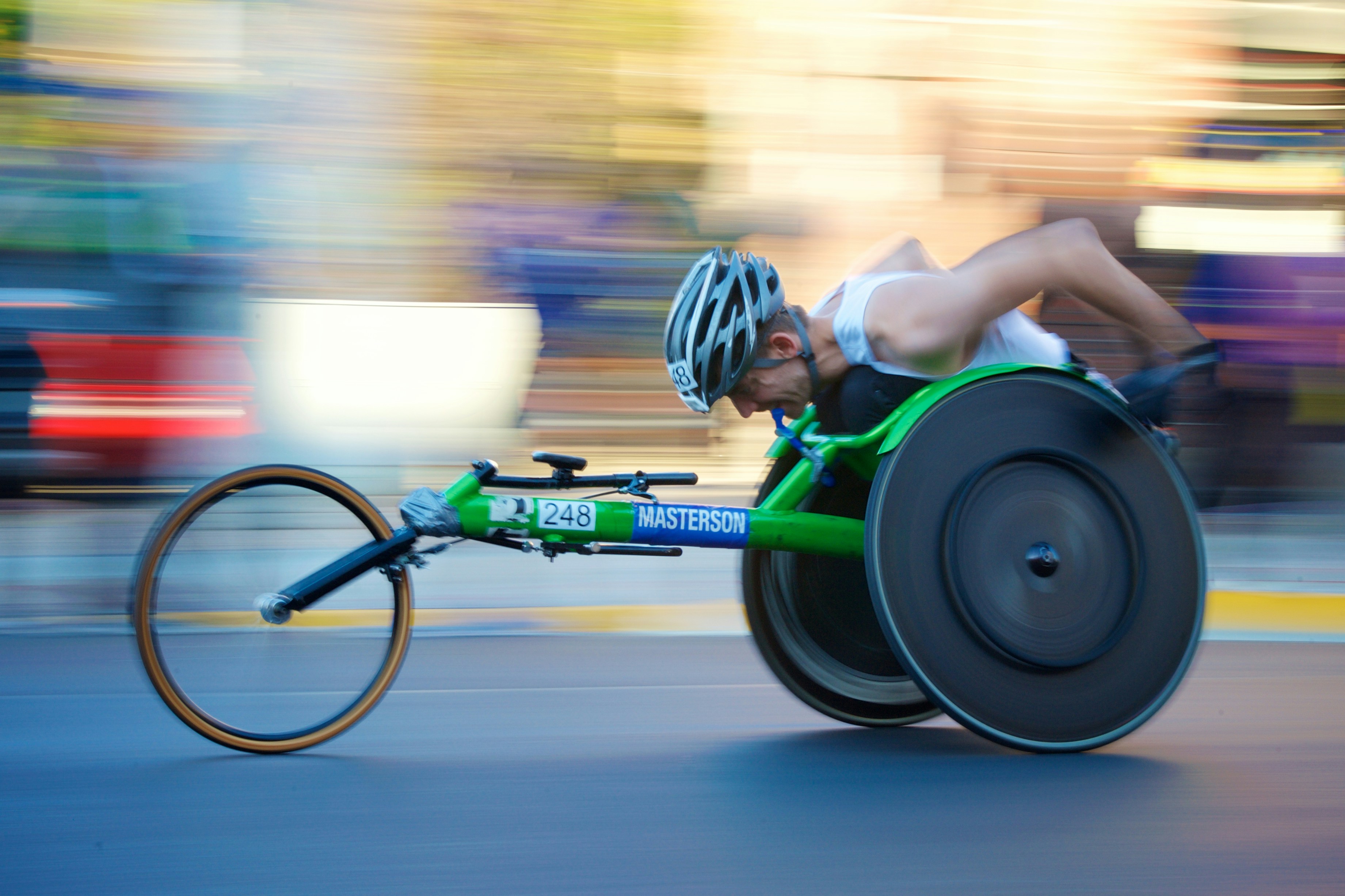
The Paralympics is an elite competition for athletes mainly with physical disabilities. The Paris 2024 Paralympics hosted nearly 4,400 athletes in 22 sports.1 The Milano Cortina 2026 Paralympic Winter Games hosted a record number of 611 athletes across six sports.2
The Special Olympics is a participation-driven competition for athletes with intellectual disabilities. “Nearly 4 million athletes and Unified Sports partners participate in Special Olympics. More than 3 million participants are people with intellectual disabilities, and over 600,000 are Unified partners without intellectual disabilities who compete on the same teams.”3
Hundreds of adaptive programs exist across the U.S., from the grassroots to elite levels, including collegiate, interscholastic, and veteran programs. The 2019 Diversity Inclusion in Sports Today Survey found that 4 out of 10 individuals with disabilities who currently do not participate in sport would like to do so, and that 70% of individuals with disabilities are unaware of organizations that support them.4
Glossary
For those new to or learning about Para sports, these definitions from Move United’s Inclusive Sport Fundamentals course may be helpful. For more about these terms and additional learning, visit Education - Move United.
Ableism - A form of discrimination or prejudice against individuals with disabilities. It involves the belief that people with disabilities are inferior to those without disabilities and can lead to the exclusion, marginalization, or mistreatment of individuals with disabilities. Ableism can manifest in various ways, such as using derogatory language, making assumptions about a person's abilities or limitations, denying access to opportunities or accommodations, and perpetuating stereotypes about disability.
Accessible - When equipment, services, or buildings are designed for people with disabilities.
Adapted - Having been modified through specialized equipment, different rules, or other changes to allow participation
Adapted Equipment - Tools that have been changed to help people with disabilities use; tools could be sport-specific or for everyday life
Adaptive Sport - Competitive or recreational sport in which most of the athletes are athletes with disabilities
Americans with Disabilities Act - The ADA is a law that was passed to prohibit discrimination against individuals with disabilities
Belonging - An individual's perception of being accepted, valued, and included within a particular group, organization, or community where the individual feels safe to show up as the individual's authentic self
Classification - A system that determines who competes in certain sport classes according to impairment criteria. Classification is sport-specific.5
Disability - A condition that limits one or more major life activities (ex. communication or movement)
Inclusion - Every person, regardless of ability, has an equal chance to participate in sports and recreation, be accepted and valued, and feel like they belong within their community.
Inclusive Sport - Inclusive sport is a form of sport in which individuals of all abilities participate in the same activity and feel accepted, valued, and have a sense of belonging.
Individuals with Disabilities Education Act - The IDEA ensures that individuals with disabilities receive education that is mindful and considerate of their needs.
Least Restrictive Environment - A setting where children with disabilities are educated alongside their peers without disabilities, unless the services cannot be sufficiently provided in a typical classroom
Para athlete - An athlete who has an impairment or disability that makes them eligible to compete in Para sport.6
Para sport - Falls under the umbrella of adaptive sports. Para sports specifically refer to those sports and disabilities that are included in the Paralympic Games.7
Universal Design - The concept that an environment is designed in a way that is most accessible to the greatest number of individuals, regardless of age, size, ability, etc.
Barriers
Para athletes face additional barriers and inequities in the world and in sport.8 Structurally, they face barriers with facilities and transportation, a lack of equipment, a lack of funding, and navigating classification systems that may be gatekeeping or not transparent or evidence-based.9 Culturally, there are media tropes and invisibility10, societal stigma, and underestimation or infantilization by others, such as coaches.11 Systemically, there is less access to programs and fewer opportunities for Para athletes.12 Therefore, society, namely sport, must intentionally consider equity, access, inclusion, belonging, and design to keep sporting environments safe and healthy for Para athletes, as these barriers can contribute to increased risk of abuse and misconduct.13
Compounded Power Imbalances
Power imbalances are present across relationships, both inside and outside of sports, in which one person holds authority over another. Power imbalances are critical to understanding abuse in sports and how control is leveraged. Power imbalances dictate who is likely to speak up and who will be believed, and they put duress on consent.
In Para sports, the power imbalance can and often is compounded between systems and authority figures over the Para athlete.
“While all athletes have regular training, nutrition and recovery needs, athletes with impairment may have an additional layer of personal care needs that could require the active, and at times, hands-on participation of teammates, coaches, trainers, parents, and other sport actors… Recent safeguarding studies suggest that athletes with higher care needs may be at increased risk of non-accidental harms, compared with athletes with lower care needs.”14
Para athletes may rely on others for support, face collective stigma, and face organizational threats, such as organizations prioritizing winning over well-being, failure to instill safeguarding protections, and institutional betrayal. These increase the risks for abuse and misconduct. Dually, reliance on compounded power imbalances and insufficient reporting structures can contribute to the normalization, permitting, and underreporting of abuse and misconduct.15 The Para athlete may feel reliant on the person(s) in power who enact the misconduct or abuse; may fear losing their sport; may not be heard or believed; and silence and compliance cannot be misinterpreted as meaning things are okay.
Types of Abuse
“Outside sport, children and adults with disabilities are approximately four times as likely to be victims of interpersonal violence than the population as a whole.”16
“Para athletes are at particularly high risk of non-accidental harms and their effects. These athletes may be at the highest risk of non-accidental harms when compared with all other athlete groups.”17
Para athletes, like other athletes, are vulnerable to experiencing all types of abuse and misconduct in sport - neglect, physical abuse, sexual abuse, emotional/psychological abuse, financial abuse/exploitation, hazing, bullying, harassment, discrimination, and stigma as abuse.18 These types of abuse often overlap and intersect and are perpetrated by authority figures, such as coaches, trainers, medical staff, and caregivers, as well as by peers. Para athletes, too, are vulnerable to systemic or institutional abuse and online abuse.
Prevalence data vary due to underreporting, inconsistent terminology, and limited research; as a result, precise incidence rates are not fully captured. What we do know is that intersectionalities increase the risk of abuse, and athletes all experience abuse and misconduct differently, and therefore harm may present differently, meaning various prevention strategies may be more or less effective for various individuals and communities.19 Factors and intersectionalities that can affect abuse experiences include early sport specialization, level of sport, racial and ethnic minorities, socioeconomic status, gender, age, LGBTQIA+, disability (and type of disability), survivorship, etc.
Along with this list of how abuse may look in sports, additional examples for Para athletes include: failure to provide or withholding of safe equipment, doping pressures20, making uniform assumptions about care needs, neglecting or exploiting athletes' dependence on personal care needs, lack of knowledge on training load and illness risk21, and using ableist and/or exclusive language.22
…the issue of accessibility and even for locomotion to reach the training places…makes psychologically many athletes, good athletes, even abandon the training, abandon the career because of the difficulty of locomotion. (Brazilian athlete)23
You only see my disability…but I can feel my ability. I know my ability… (Indian athlete)24
[Only] one escort will do the shifting and no other assistance will be provided. And that is very difficult… this is not very practical for a severely disabled person to be shifted by a single person. (Indian athlete)25
…sometimes equipment that you use that fits you better to perform…a coach can force another [teammate] to use that chair, even though it might not be in a good sitting position for him. (Ghanaian athlete)26
“I’ve had coaches that sent memes to athletes about three-legged dogs and paralysed dogs to inspire us to play better in the next game. Non-disabled folks sending these things along…even within our own community. I think of the internal violence that disabled athletes do to each other in terms of the mocking of Special Olympics by Paralympians. The devaluation of the competition by particular athletes…The devaluation of disabled athletes, athletic capacities, experiences, the way systemically disabled people are blocked from becoming leaders in their own sports…I’ve experienced and seen in athletes an incredible amount of harm to do with the amount of continual surveillance and coercion from able-bodied coaches…I’d say having an impairment that isn’t stable and static made me more subject to scrutiny around classification and certainly made and set me up to be forced or coerced to do things by my coaching staff that were explicitly against the agreed upon protocol that would keep me safe.”27
Safeguarding Solutions28
- Listen to athlete voices – There is limited research on abuse and misconduct in Para sports.29 We do know that effective safeguarding solutions must be community-centered and attend to the unique needs of sport stakeholders and that Para sports and able-bodied sports have key differences.30 To better understand the concerns and needs in Para sport, and to keep Para athletes safe, develop, and evaluate evidence-based programs and processes, more research is needed. Acutely, this means listening to athletes' voices to learn from their lived experiences and develop informed safeguarding strategies.
- Separate roles of control – Para athletes may rely heavily on their entourage members for assistance in and outside of sport.31 Given the power imbalances at play, in which the athlete may be reliant on others, it can be effective to distribute that power across roles of control. This means not having the athlete rely on one or a few people in power for all their needs, but rather diversifying who assists with what. For example, separate the roles of caregiver, coach, and transportation. This creates a system of checks and balances between those in power over the athlete, decreasing the leverage and control that one person may hold. In turn, the athlete has a range of people in their network to seek support. This model helps empower the athlete and improve their autonomy, creating multiple pathways for them to speak up and access opportunities in sport.
- Boundaries and consent – For every athlete, there must be clear boundaries and understanding among the athlete’s entourage regarding what is appropriate, what requires oversight, and how consent is requested, given, and respected. This looks like creating written protocols defining what support is needed, how it will be delivered, and what requires accountability structures. These decisions regarding physical and logistical support and coaching must involve the athlete. When everyone is on the same page, with clear, defined boundaries and processes, guessing or questioning what is okay is reduced, and everyone is empowered to recognize and speak up when something is not okay.
- Transparency and empowerment – From classification to team selection to athletes’ rights, there must be clear and objective standards and processes in place.32 This matters in terms of individuals' access to sport, what is appropriate in assessments, and being informed about rights and responsibilities. When information is accessible and oversight systems are independent, athletes can better recognize harmful practices, ask questions, and speak up. Transparency in these processes and systems makes it harder for power to be misused and athletes to be controlled.
- Increase education and awareness, and structural safeguards – Prevention education and increased awareness of safeguarding concerns are the first line of defense in keeping athletes and sporting environments safe and healthy. This looks like delivering appropriate safeguarding education to athletes and their entourages on disability awareness33, boundaries, consent, types of abuse, power imbalances, healthy relationship dynamics, and best practices. Furthermore, there must be increased education and communication on health needs and monitoring programs involving the athlete, the coach, and the health team to improve athlete health and well-being.34 Dually, there must be structural safeguards in place wherever athletes train, practice, and compete, including during transportation and lodging. This looks like organizations upholding codes of conduct, safeguarding policies, and accessible reporting pathways. And, all of the above must be informed by and centered around the Para athletes.
- Support volunteers - Adaptive and Para sports organizations often rely heavily on volunteers due to financial limitations and being community-driven.35 “Volunteers in these settings not only contribute to logistical and operational tasks but also help foster empowering and socially supportive experiences for athletes with disabilities.”36 Therefore, volunteers must be treated as a valuable stakeholder group. This means volunteers must be included in safeguarding policies, complete background checks, and complete role-specific training to create a safe and healthy sporting environment. When volunteers are supported with the tools they need, they can better support athletes.
“If Safe Sport included disabled people in conversations, planning, or even hiring processes, then maybe sport would look a little more accessible. We’d have wheelchair ramps or adapted equipment readily available in different spaces, we’d have posters or commercials starring successful Paralympic athletes. Maybe the Paralympics would be held before the Olympics, instead of just being an afterthought. The same can be said with other marginalized groups. They wouldn’t have to be accommodated for if they were included from the start. I’m probably biased but I think it’s harder for disabled people because a lot of times we can’t physically participate because a space or sport isn’t designed with us in mind.”37
Every athlete has the right to play, train, and compete in sport without the fear of or experiencing abuse or misconduct. We all have a role to play in protecting athletes and keeping sports safe.
Learn more or find a program at:
- Move United
- Challenged Athletes Foundation
- Paralympic Sport Development | USOPC
- Special Olympics Resources
- American Association of Adapted Sports Programs
- Adaptive Sports Programs – Amputee Coalition
- World Abilitysport
- Virtus
- International Blind Sports Federation
If you or someone you know needs support, visit our crisis resources.
Kathryn McClain, MSW, MBA
Program and Partnerships Director at #WeRideTogether
kmcclain@weridetogether.today
Footnotes
- International Olympic Committee, 2024
- International Paralympic Committee, 2026
- Special Olympics, 2024
- TD Bank, 2019
- Paralympics New Zealand, n.d.
- Ibid.
- United States Olympic & Paralympic Committee, n.d.
- Kamberidou et al., 2019
- Wileman et al., 2025
- Patatas et al., 2018
- Tuakli-Wosornu & Kirby, 2022
- Patatas et al., 2018
- Kamberidou et al., 2019
- Tuakli-Wosornu et al., 2020
- Tuakli-Wosornu & Kirby, 2022
- Ibid.
- Tuakli-Wosornu et al., 2020
- Rutland et al., 2022
- Tuakli-Wosornu & Kirby, 2022
- Weber et al., 2022
- Hirschmüller et al., 2021
- Tuakli-Wosornu & Kirby, 2022
- Rutland et al., 2022
- Ibid.
- Ibid.
- Ibid.
- Gurgis et al., 2022
- Tuakli-Wosornu & Kirby, 2022
- Patatas et al., 2018
- Ibid.
- Tuakli-Wosornu et al., 2020
- Wileman et al., 2025
- Kamberidou et al., 2019
- Fagher et al., 2025
- Khurana et al., 2021
- Han & Kim, 2025
- Gurgis et al., 2022
References
- Fagher, K., Runciman, P., Adam, F., Badenhorst, M., Eken, M., Johannesdottir, H., Kenttä, G., Kunorozva, L., Lexell, J., Stenman, A., Wik, E., & Derman, W. (2025). A framework for safe, healthy and sustainable participation in elite Para sport. British Journal of Sports Medicine, 59, Article bjsports-2025. https://doi.org/10.1136/bjsports-2025-109959
- Gurgis, J. J., Kerr, G., & Darnell, S. (2022). “Safe sport is not for everyone”: Equity-deserving athletes’ perspectives of, experiences and recommendations for safe sport. Frontiers in Psychology, 13, 832560. https://doi.org/10.3389/fpsyg.2022.832560
- Han, K., & Kim, K. T. (2025). Volunteering in adaptive sport: Effects of altruistic and egoistic motivation on performance and sustained intention. Frontiers in Sports and Active Living, 7, 1592202. https://doi.org/10.3389/fspor.2025.1592202
- Hirschmüller, A., Fassbender, K., Kubosch, J., Leonhart, R., & Steffen, K. (2021). Injury and illness surveillance in elite Para athletes: An urgent need for suitable illness prevention strategies. American Journal of Physical Medicine & Rehabilitation, 100(2), 173–180. https://doi.org/10.1097/PHM.0000000000001501
- International Olympic Committee. (2024, August 23). Paris 2024 Paralympics: Facts and figures about the 2024 Paralympic Games. https://www.olympics.com/en/news/paris-2024-paralympics-facts-and-figures-about-the-2024-paralympic-games
- International Paralympic Committee. (2026, March 5). Record number of NPCs and athletes to compete at Milano Cortina 2026. https://www.paralympic.org/news/record-number-npc-athletes-milano-cortina-2026
- Kamberidou, I., Bonias, A., & Patsantaras, N. (2019). Sport as a means of inclusion and integration for “those of us with disabilities”. European Journal of Physical Education and Sport Science, 5(12), 99–128. https://doi.org/10.5281/zenodo.3464696
- Khurana, R., Wang, A., & Carrington, P. (2021). Beyond adaptive sports: Challenges and opportunities to improve accessibility and analytics. In Proceedings of the 23rd International ACM SIGACCESS Conference on Computers and Accessibility (ASSETS ’21) (Article 6). Association for Computing Machinery. https://doi.org/10.1145/3441852.3471223
- Patatas, J. M., De Bosscher, V., & Legg, D. (2018). Understanding parasport: An analysis of the differences between able-bodied and parasport from a sport policy perspective. International Journal of Sport Policy and Politics, 10(2), 235–254. https://doi.org/10.1080/19406940.2017.1359649
- Paralympics New Zealand. (n.d.). What is a Para athlete? https://paralympics.org.nz/news/what-is-a-para-athlete/
- Rutland, E. A., Suttiratana, S. C., da Silva Vieira, S., Janarthanan, R., Amick, M., & Tuakli-Wosornu, Y. A. (2022). Para athletes’ perceptions of abuse: A qualitative study across three lower resourced countries. British Journal of Sports Medicine, 56(10), 561–567. https://doi.org/10.1136/bjsports-2021-104545
- Special Olympics. (2024). Fast facts. https://www.specialolympics.org/about/press-room/fast-facts
- TD Bank. (2019, June). Diversity inclusion in sports today survey: Individuals with disabilities survey results infographic [Infographic]. https://stories.td.com/us/en/uploads/multimedia/TD-IwDs-Survey-Results-Infographic.pdf
- Tuakli-Wosornu, Y. A., & Kirby, S. L. (2022). Safeguarding reimagined: Centering athletes’ rights and repositioning Para sport to chart a new path. Frontiers in Psychology, 13, 815038. https://doi.org/10.3389/fpsyg.2022.815038
- Tuakli-Wosornu, Y. A., Sun, Q., Gentry, M., et al. (2020). Non-accidental harms (“abuse”) in athletes with impairment (“para athletes”): A state-of-the-art review. British Journal of Sports Medicine, 54(3), 129–138. https://doi.org/10.1136/bjsports-2018-099854
- Tuakli-Wosornu, Y. A., Chowdhary, K., Stratton, C. S., Glotfelty-Scheuering, O., & Raum, G. (2024). Safeguarding strategies in athletes with intellectual disabilities: A narrative review. PM&R, 16(4), 374–383. https://doi.org/10.1002/pmrj.13110
- United States Olympic & Paralympic Committee. (n.d.). About para sport. https://www.usopc.org/para-college-sport/about-para-sport
- Weber, K., Patterson, L. B., & Blank, C. (2022). Doping in disabled elite sport: Perceptions, knowledge and opinions from the perspective of German and UK coaches. Psychology of Sport and Exercise, 62, 102233. https://doi.org/10.1016/j.psychsport.2022.102233
- Wileman, T. M., McKay, M. J., Hackett, D. A., Watson, T. J., Fleeton, J., & Fornusek, C. (2025). Guiding evidence-based classification in Para sporting populations: A systematic review of impairment measures and activity limitations. Sports Medicine, 55(2), 341–391. https://doi.org/10.1007/s40279-024-02132-y